


Signs Your Roof Needs Replacement
Granule loss, curling shingles, repeat leaks and a soft deck are the signs that matter. What to look for from the ground and the attic, and what each one tells you.
Read more: Signs Your Roof Needs Replacement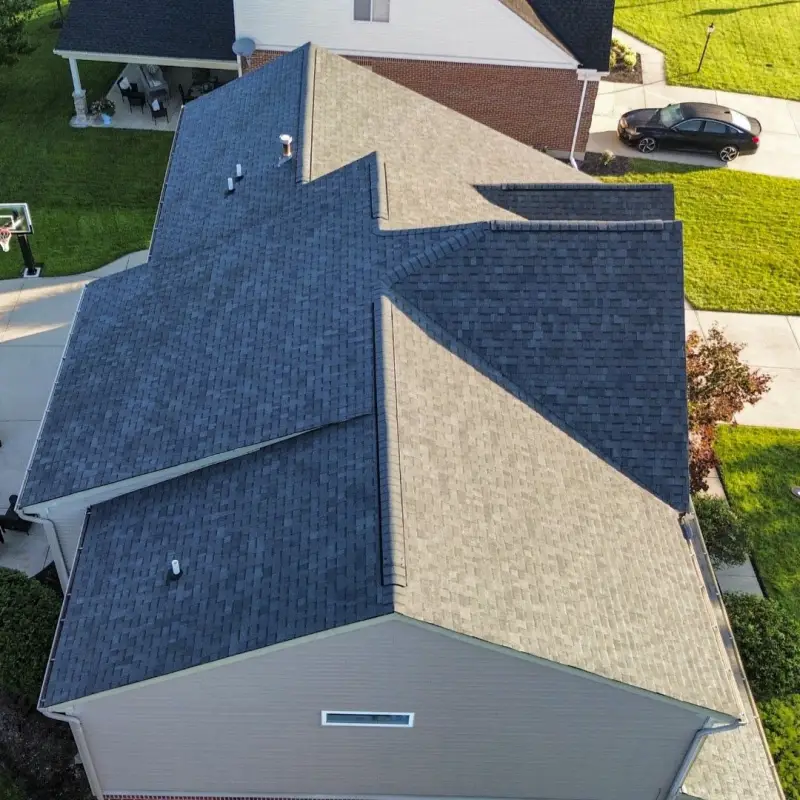
Roofing
Asphalt shingle, metal and rubber each suit different roofs. How pitch, budget, looks and Pittsburgh weather point you toward the right one.
Licensed & InsuredFree Estimates24/7 Emergency Roofing
When it is time for a new roof, material is one of the first choices you make. For most Pittsburgh homes the realistic options are asphalt shingles, metal roofing and rubber roofing for flat or low-slope sections. Each has real strengths and real limits. This guide explains how they compare so you can choose with confidence.
Roof pitch narrows the choice before anything else. Shingles and most metal panels are designed for sloped roofs where water runs off quickly. Flat and low-slope roofs need a membrane, such as rubber, that keeps water out even when it sits for a while.
Many Pittsburgh homes have both. A rowhouse might have a steep front slope and a nearly flat rear roof. A porch or a back addition may have its own low-slope roof. It is common, and sensible, to use shingles on the steep areas and rubber on the low ones.
Where two materials meet, the transition needs careful flashing. Many leaks on older homes start at exactly these spots: where a porch roof ties into a wall, where a low rear roof meets a steeper slope, or around a chimney that sits between the two. Whatever materials you pick, ask how those junctions will be handled.
Asphalt shingles are the most common roofing material on Pittsburgh homes, and for good reason. They suit a wide range of house styles, come in many colors, and are familiar to most roofers, which makes future repairs straightforward.
For most sloped roofs in the city, a quality architectural shingle installed with good underlayment, ice and water protection at the eaves and valleys, and proper ventilation is a dependable, practical choice.
Metal roofing has become a more common choice for homeowners who want a long-lasting roof and a different look. It is typically installed in panels and suits both modern and traditional homes, as well as porches and additions.
Metal is often a strong fit for simpler roof shapes, porch roofs and homeowners who plan to stay for the long term. On a Victorian with many dormers and turrets, the extra detailing may tip the balance back toward shingles.
Rubber roofing, often called EPDM, is a membrane installed in large sheets over flat and low-slope roofs. On Pittsburgh homes it is most common on rowhouse rear roofs, porches, additions and garages.
If an older rear roof has been coated or patched many times, replacing it with a properly installed rubber membrane is often the cleanest fix. The key details are the edges, the seams and where the membrane turns up the wall.
Color is worth a thought too. Lighter roofs tend to reflect more summer heat, while darker shingles are a traditional match for many brick homes. Look at roofs on similar houses nearby, and ask to see full-size samples in daylight, since small chips can look very different on a whole roof.
Whatever you choose, installation quality matters as much as the material. Flashing, underlayment and ventilation decide how well any roof handles a Pittsburgh winter. Our article on preparing your roof for winter covers what to check each fall.
Straight A installs asphalt shingle, metal and rubber roofing on Pittsburgh homes. During a free inspection we look at your roof's pitch, condition and layout and explain which options fit. You choose the material and color, and you get a detailed written quote before any work begins. Our roofing materials come with a lifetime product warranty, backed by our own 2-year workmanship guarantee.
Learn more about shingle, metal and rubber roofing or contact us to set up a visit.
Keep reading
Granule loss, curling shingles, repeat leaks and a soft deck are the signs that matter. What to look for from the ground and the attic, and what each one tells you.
Read more: Signs Your Roof Needs ReplacementFreeze-thaw cycles, ice dams, wet snow and a yard full of leaves all test a roof between November and March. Here is what to check this fall, and what to leave to a roofer.
Read more: Preparing Your Roof for a Pittsburgh WinterStay safe, stop the water, document everything and get the roof inspected before you accept a quick patch. A step-by-step guide for the hours and days after a storm.
Read more: What to Do After Storm Damage to Your Roof

